
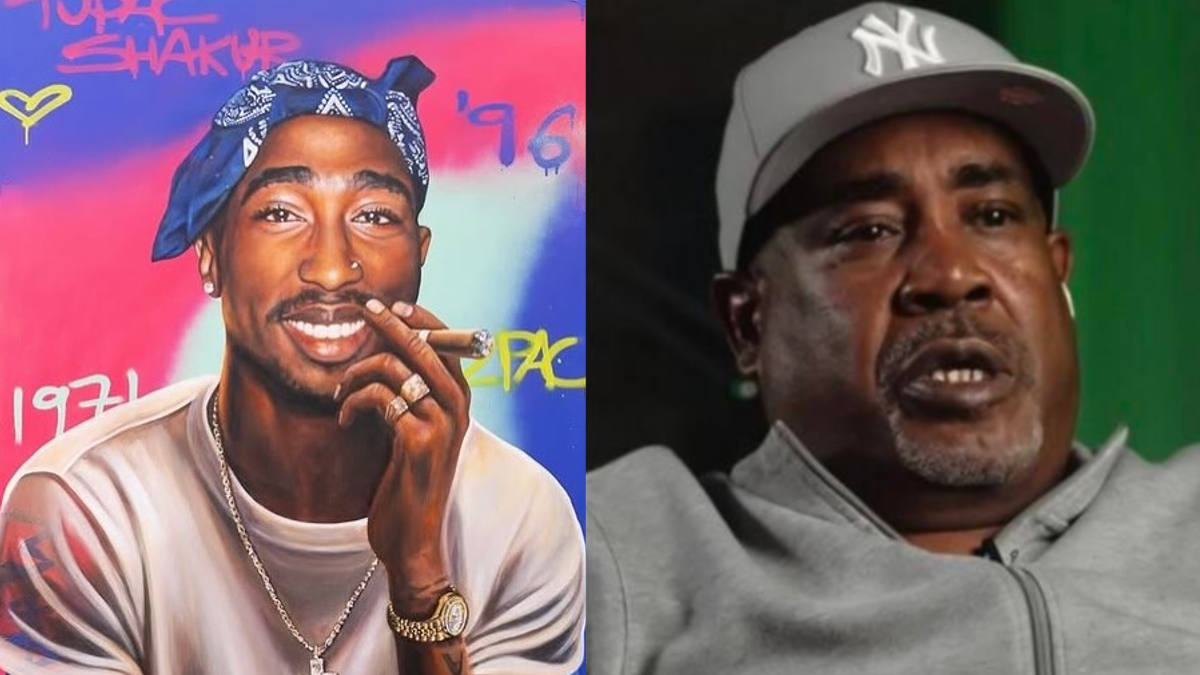
Nearly three decades after the killing of Tupac Shakur, the case has taken another major legal turn. The rapper’s estate has now filed a wrongful death lawsuit against Duane ‘Keefe D’ Davis, the only individual ever arrested in connection with the 1996 shooting. The lawsuit has been brought forward by Tupac’s stepbrother, Mopreme Shakur, on behalf of the estate. It argues that Keefe D should be held civilly responsible for Tupac’s death, even as the criminal case against him continues to move through the courts.
Keefe D was arrested in 2023 in Las Vegas and has pleaded not guilty. He has long been a controversial figure in the case, partly because of his own public statements over the years. He has admitted to being in the car from which the fatal shots were fired, though his account of the events has shifted multiple times. His criminal trial is currently expected to begin in August.
The civil lawsuit expands beyond just Keefe D. It also names several unidentified individuals, referred to as “John Does,” suggesting that Tupac’s killing was part of a larger conspiracy. While law enforcement has not officially charged anyone else, the estate is arguing that more people were involved and should ultimately be held accountable.
One of the more explosive aspects of the filing is its reference to past allegations involving Sean ‘Diddy’ Combs. According to claims mentioned in a documentary, Keefe D allegedly suggested that there may have been financial incentives offered to carry out the attack on Tupac and Suge Knight. These claims have not been proven in court, but their inclusion highlights how complex and controversial the case remains.
Tupac Shakur was shot in September 1996 in Las Vegas after attending a boxing match. He died days later at the age of 25, and his murder became one of the most infamous unsolved cases in music history. Despite years of speculation, investigations, and public theories, no one was charged until Keefe D’s arrest nearly 27 years later.
The wrongful death lawsuit represents a different path toward accountability. Unlike criminal cases, civil lawsuits require a lower burden of proof. This means Tupac’s estate could potentially secure a legal judgment even if the criminal case does not result in a conviction. For the family, it is another attempt to seek justice after decades of unanswered questions.
Beyond the legal implications, the case continues to hold cultural weight. Tupac remains one of the most influential figures in hip hop, and his death still resonates across generations. Each new development brings renewed attention to a story that has never fully been resolved.
As the criminal trial approaches and the civil case unfolds, the next phase of this long running saga could finally provide some clarity. Whether it leads to closure is another question entirely.