
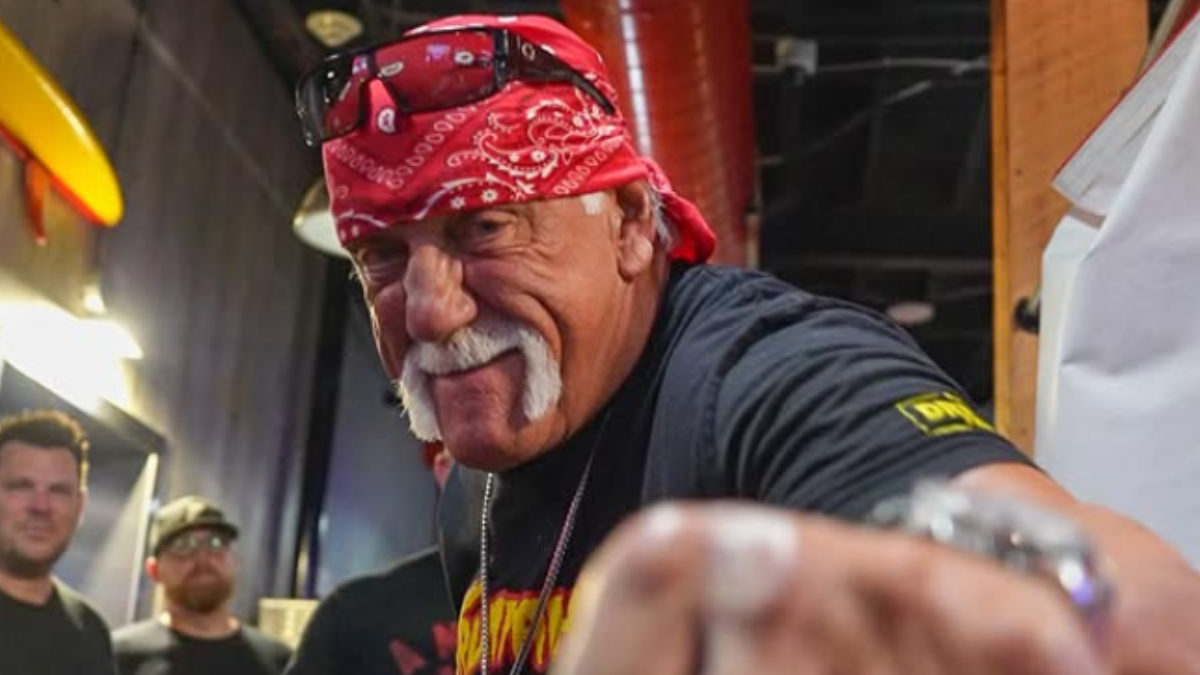
A new Netflix docuseries, Hulk Hogan: Real American, is shedding light on the deeply troubling final chapter of Hulk Hogan’s life, revealing just how severe his physical and emotional struggles had become behind the scenes. The series, which features interviews recorded before his death in 2025, offers a raw and unfiltered look at the toll decades of professional wrestling took on his body. At the center of that story is his admission of extreme fentanyl use during his attempted return to wrestling in 2009.
Hogan described taking dangerously high doses of the drug while trying to fulfill commitments with Total Nonstop Action Wrestling. According to his own account, the amount was so excessive that even medical professionals reportedly expressed shock that he was still alive. His pain, stemming from multiple surgeries and long-term injuries, had reached a point where basic movement became a struggle.
The documentary also connects this physical deterioration to a difficult period in his personal life, particularly his divorce from Linda Hogan. Hogan admitted that the split left him financially and emotionally drained, describing it as a moment where he hit rock bottom.
Those around him witnessed the decline firsthand. Former wrestling executive Eric Bischoff recalled how Hogan was pushed to continue working despite being in no condition to perform, highlighting the pressure tied to contracts and expectations. What was meant to be a comeback quickly became a visible struggle.
Beyond substance use, the series also addresses Hogan’s mental health. He openly spoke about a period where he spiraled into heavy drinking and pill use, eventually reaching a point where he contemplated ending his life. It is one of the most sobering revelations in the documentary, showing a side of the larger-than-life figure that fans rarely saw.
What emerges from Real American is not just the story of a wrestling icon, but of a man grappling with pain, identity, and the cost of a career built on physical sacrifice. It reframes Hogan’s later years, shifting the focus from spectacle to survival.
The series ultimately leaves viewers with a more complicated legacy, one that acknowledges both his cultural impact and the very real struggles that defined his final chapter.