
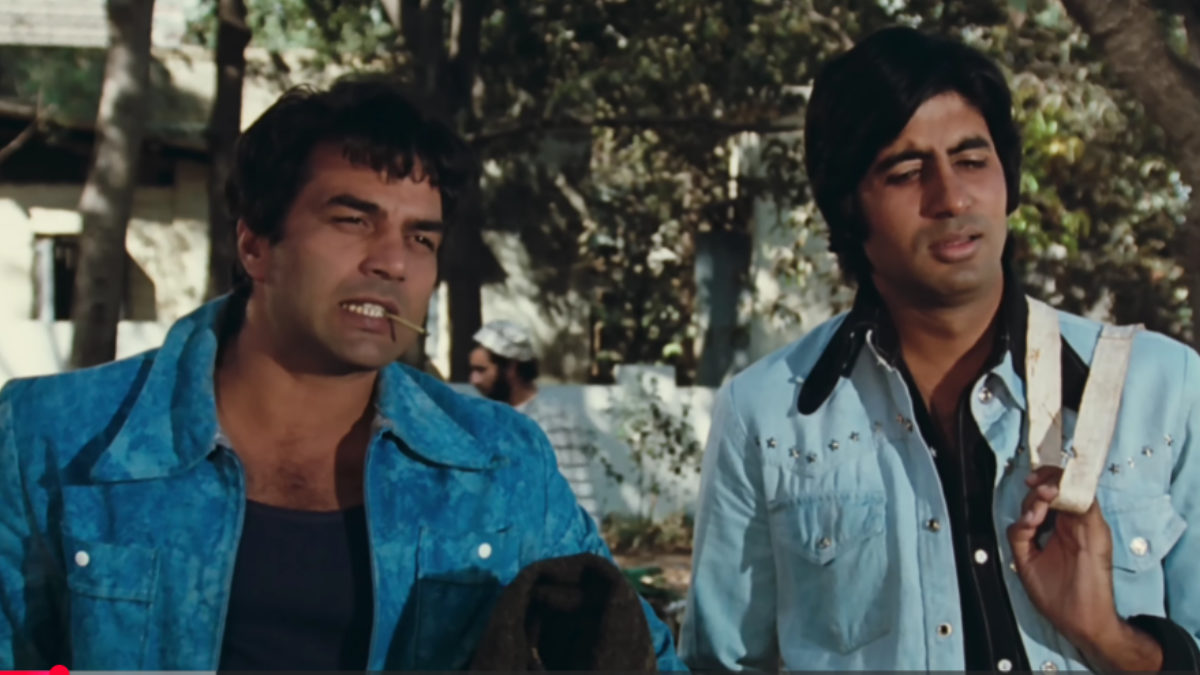
As Sholay marks its 50th anniversary with a restored 4K re-release, the classic is drawing fresh attention from younger audiences discovering it for the first time — and older fans eager to revisit what many call India’s greatest film. But beyond the familiar nostalgia, there is a compelling new conversation emerging: Sholay may have been India’s first accidental cinematic universe, a film whose rich characters, layered arcs and world-building predicted the storytelling style that dominates global cinema today. This editorial revisits the film through a modern lens, uncovering surprising insights, rare anecdotes and the deeper legacy that explains why Sholay continues to trend, resonate and reinvent itself even five decades later.
There are films that live in their time, and then there are films that slip past decades as if they were designed for an audience not yet born. Ramesh Sippy’s Sholay belongs to the second category, a movie that somehow keeps widening its relevance with every passing generation. As it prepares to return in a restored 4K avatar for its 50th year, perhaps the most fascinating rediscovery is not how well the film has aged — but how eerily it foreshadowed the storytelling blueprint of today’s cinematic universe era.
Long before Marvel assembled its heroes, before franchises expanded into spin-offs and prequels, Sholay was quietly, almost accidentally, doing something astonishing: building a shared world with layered characters whose lives extended beyond the frame. It was, in many ways, India’s first cinematic universe — even though nobody called it that in 1975.
Look closely and you’ll see the clues. Every character in Sholay is written with a self-contained emotional arc, the kind of individual journey that modern franchises spend entire films exploring. Gabbar Singh wasn’t just a villain; he was a personality with mythic aura. Jai and Veeru weren’t just comic-action heroes; they were the original “found family,” bound not by blood but by choice, a theme that resonates deeply with today’s generation raised on Guardians of the Galaxy and Fast & Furious. Radha’s quiet grief, Basanti’s infectious bravado, Imam Saab’s dignity, Soorma Bhopali’s flamboyance — these were not side notes, but characters with their own gravitational pull.
It’s no accident that Soorma Bhopali later got his own film. Or that Gabbar Singh became an independent cultural franchise of his own, shaping advertisements, memes, stage routines, and academic studies. Sholay didn’t just release a film — it released characters into the world.
Even the village of Ramgarh feels today like the kind of meticulously built world modern franchises sweat over. It has its own sociology, internal politics, geography, and collective memory. Ramgarh is no different from Wakanda, Hogwarts, or Middle-earth — a place that becomes a character itself.
And perhaps this is the real story worth telling the young generation: Sholay wasn’t simply a blockbuster from the past; it was a film operating decades ahead of its time. It pioneered emotional storytelling now celebrated in contemporary cinema — trauma arcs, chosen families, morally complex characters, and quiet inner conflicts. Thakur’s disability and his restrained anguish, Radha’s silent battles with loneliness, Jai’s emotionally guarded spirit, Veeru’s humor-as-shield — these are the kinds of psychological depths modern writers strive to capture.
If you look through a 2025 lens, Sholay suddenly feels modern in ways we didn’t previously articulate. Its dialogues read like early prototypes of meme culture — sharp, rhythmic, and designed for endless reinterpretation. Its set pieces feel like franchise tentpoles. Its characters feel like the first members of an Indian mythology built not from gods, but from flawed, passionate humans.
For older generations, the return of Sholay is an emotional homecoming. For younger viewers, it is a revelation — a chance to see how a 1975 film predicted the mechanics of the cinematic universes they consume today. What was once dismissed as a “curry Western” now reveals itself as a foundational text of Indian pop culture, a movie that shaped dialogue-writing, character-building, merchandising, memes, and, quietly, the future of mass storytelling.
Half a century later, one truth stands tall:
Sholay wasn’t merely ahead of its time.
It was already living in ours.
And maybe that is why it never grows old — because the world is still catching up with it.
Fifty years after its release, Sholay continues to grow, not fade. Its characters now live across generations, its dialogues thrive in meme culture, and its world-building feels more aligned with 2025 storytelling than the cinema of its own time. As the film returns in a fully restored 4K version, it offers today’s audience not just nostalgia, but a rediscovery — a reminder that some classics aren’t simply preserved in memory, they evolve with us. And if Sholay still feels relevant, modern and astonishingly fresh after half a century, it’s because the film was never just a moment in Indian cinema. It was the beginning of a universe we’re only now learning to describe.
For more stories, rare insights, casting anecdotes, and behind-the-scenes legends from Bollywood’s greatest films, stay tuned — the journey into cinema’s most iconic moments is just getting started.