Home Blog Page 137

Bhooth Bangla: Akshay Kumar’s Song Ram Ji Aake Bhala Karenge Teaser Is Spooky, Funny and Totally Viral

0

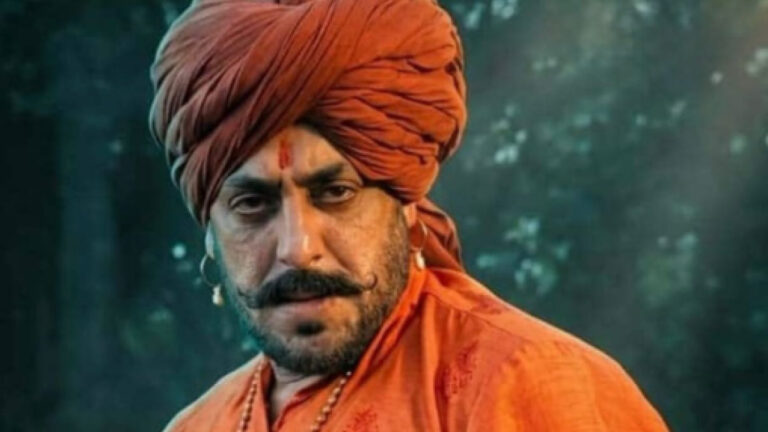
Akshay Kumar is all set to return to the big screen with his upcoming horror-comedy Bhooth Bangla, a film that has been generating buzz since its announcement. Adding to the growing excitement, the actor recently unveiled the teaser of the film’s first track, titled Ram Ji Aake Bhala Karenge, which is scheduled to release on February 26.

Sharing the teaser on social media, Akshay playfully engaged fans by hinting at the film’s spooky yet entertaining tone. His caption reflected the film’s blend of horror and humour, inviting audiences to join him and his ghostly companions as the anticipation builds toward the movie’s theatrical release on April 10, 2026.

The teaser has already sparked enthusiastic reactions online. Many fans celebrated what they see as Akshay’s return to his signature comedic space, with comments praising the nostalgic vibe and predicting a major blockbuster. The excitement largely stems from the film’s promise of reviving the classic horror-comedy genre that has often worked well for the actor in the past.

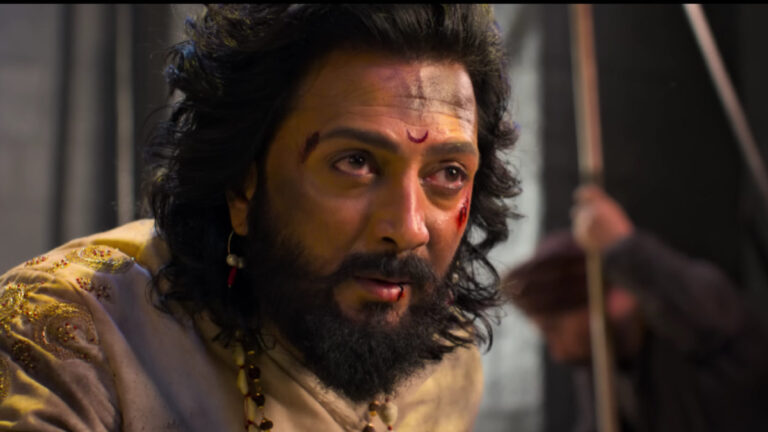
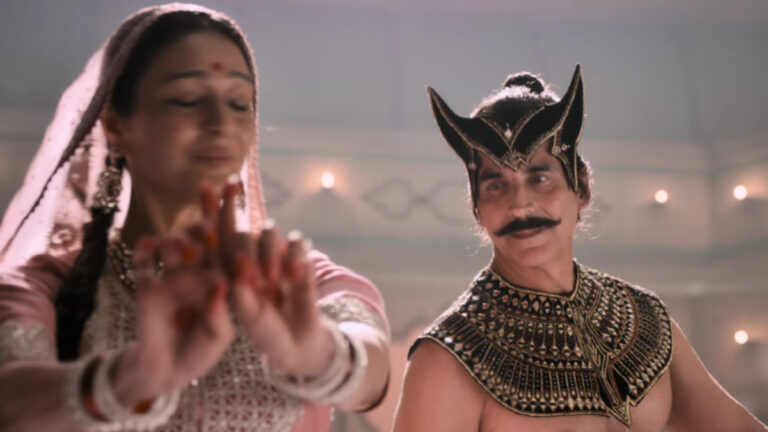
The visual tone of Bhooth Bangla leans into an intense horror aesthetic while maintaining a strong comedic undercurrent. Akshay appears in a striking look that includes traditional rudraksha beads, an ominous throne adorned with demonic carvings, and his trademark mischievous laugh. The dramatic setting hints at a larger-than-life narrative that balances supernatural thrills with lighthearted humour.

Further fueling interest, Akshay also shared a motion poster that reinforces the film’s playful yet eerie atmosphere. The visuals suggest a world where spine-chilling elements coexist with fun-filled chaos, setting the stage for a theatrical experience that aims to entertain across age groups.

The film also brings together an impressive ensemble cast featuring Wamiqa Gabbi, Paresh Rawal, Tabu, Rajpal Yadav, Mithila Palkar and the late Asrani.

During a recent promotional interaction, Akshay revealed that Mithila will be portraying his sister in the film. Welcoming her warmly, he praised her journey from digital platforms to mainstream cinema, noting her growing presence in films.

Mithila, in turn, shared lighthearted behind-the-scenes moments from the shoot. She joked about losing money to Akshay during games on set and playfully expressed her intent to recover it. The banter continued with Akshay teasing that future games might involve more physical competition, adding a glimpse of the camaraderie shared by the cast.

Presented by Balaji Motion Pictures in association with Cape of Good Films, Bhooth Bangla is directed by Priyadarshan and produced by Akshay Kumar, Shobha Kapoor and Ektaa R Kapoor.

With its intriguing mix of horror, humour and star power, the film promises to deliver an entertaining cinematic ride when it hits theatres on April 10, 2026.

Martin Short’s Daughter Catherine Hartley Short Dies at 42, Family Requests Privacy Amid Tragic Loss

0

Catherine Hartley Short, the daughter of beloved actor and comedian Martin Short, has passed away at the age of 42. The news was confirmed through a statement issued by the family’s representative, describing the loss as deeply devastating for those closest to her.

“It is with profound grief that we confirm the passing of Catherine Hartley Short,” the statement read. “The Short family is devastated by this loss and asks for privacy at this time. Catherine was beloved by all and will be remembered for the light and joy she brought into the world.”

According to multiple media reports, Catherine died by suicide and was found at her Hollywood Hills home. While details surrounding the circumstances remain limited, the focus from family and loved ones has been on honoring her life rather than the tragedy of her passing.

Martin Short has long been recognized as one of comedy’s most cherished figures, known for decades of work across television, film, and stage. Off screen, he has often spoken about the importance of family, especially following the loss of his wife Nancy Dolman in 2010. Catherine, along with her siblings, remained a central part of his private life, largely staying away from the spotlight despite her father’s immense public recognition.

Friends and acquaintances have described Catherine as warm, kind, and deeply loved within her personal circle. Though she maintained a relatively low public profile, those who knew her remember her for her humor, compassion, and strong sense of connection with others. The family’s statement emphasized not only grief but gratitude for the joy she brought into the lives around her.

The news has prompted an outpouring of condolences online, with fans and fellow entertainers expressing support for Martin Short and his family during an unimaginably painful time. Public reactions have also reopened conversations around mental health awareness and the importance of compassion when discussing personal tragedies.

When reporting on deaths involving suicide, mental health experts encourage sensitivity and care, emphasizing remembrance, empathy, and support for those affected. Losses like this resonate far beyond celebrity headlines, reminding audiences of the deeply human struggles that can exist behind public personas and private lives alike.

The Short family has requested space to mourn privately as they navigate this difficult period. Catherine Hartley Short is being remembered not through headlines but through the love and memories shared by those closest to her, a legacy defined by the joy and warmth her family says she carried throughout her life.

If you or someone you know is struggling, reaching out for help can make a difference. In India, you can contact AASRA at 9820466726. In the United States, the Suicide and Crisis Lifeline is available by calling or texting 988. Support is available, and no one has to face difficult moments alone.

Paul Anthony Kelly Is the Internet’s New Bruce Wayne and Honestly, Fans Might Be Onto Something

0

Every few months the internet collectively decides on a new obsession, and right now that obsession has a name. Paul Anthony Kelly. Fresh off his breakout performance as JFK Jr. in Love Story, the newcomer has unexpectedly become the center of one of pop culture’s favorite traditions, fan casting the next Batman.

What makes this moment different is how organic it feels. Kelly is not campaigning for superhero roles. He is not part of a franchise rollout or studio marketing strategy. The momentum began purely from audience reaction. Viewers watched Love Story, saw his screen presence, his quiet confidence, the restrained charisma, and immediately thought the same thing. That is Bruce Wayne.

When asked about fans imagining him as Gotham’s billionaire vigilante, Kelly’s response only fueled the conversation further. “If that’s what they say, then who am I to say no? That would be a dream come true.” It was humble, playful, and exactly the kind of answer that makes audiences root for someone even harder.

Bruce Wayne is one of the most difficult roles to cast because audiences are not looking for a superhero first. They are looking for duality. The character demands elegance without arrogance, mystery without detachment, and vulnerability hidden behind wealth and control. Over decades, actors from Michael Keaton to Christian Bale and Robert Pattinson each defined a different version of the character, proving that Batman works best when the actor brings something unexpected.

What fans are reacting to in Paul Anthony Kelly is that rare cinematic quality that cannot be manufactured. In Love Story, his portrayal of JFK Jr. carried a natural aristocratic energy mixed with emotional restraint. He looked comfortable in silence, expressive without overacting, and effortlessly magnetic on screen. Many viewers described his performance as the most “Bruce Wayne coded” presence they had seen from a new actor in years.

Perhaps the most shocking detail is that this is reportedly Kelly’s first major acting role. In an industry filled with carefully engineered career launches, his sudden rise feels almost old Hollywood. A newcomer arrives, delivers a performance that captures public imagination, and suddenly audiences begin projecting iconic roles onto him.

Fan casting has become a powerful force in modern Hollywood. Studios now monitor online conversations closely because audience enthusiasm often predicts box office interest. The internet helped push actors like John Krasinski into superhero conversations and shaped early support for Robert Pattinson’s Batman long before official acceptance followed. Right now, Paul Anthony Kelly is experiencing that same wave of organic momentum.

Of course, casting Bruce Wayne involves far more than appearance or internet approval. It requires timing, studio vision, and a director willing to redefine the character once again. But fans are not responding only to how Kelly looks. They are responding to how he feels on screen. He carries the aura of someone who could convincingly live two lives, the public prince and the private loner.

Whether Hollywood listens remains to be seen. But one thing is certain. No one has accidentally Bruce Wayne’d this hard in a debut role before. And for the first time in a while, the internet’s newest obsession does not feel forced. It feels earned.

Zara Larsson Says She Blocks Abusive Artists on Spotify  

0

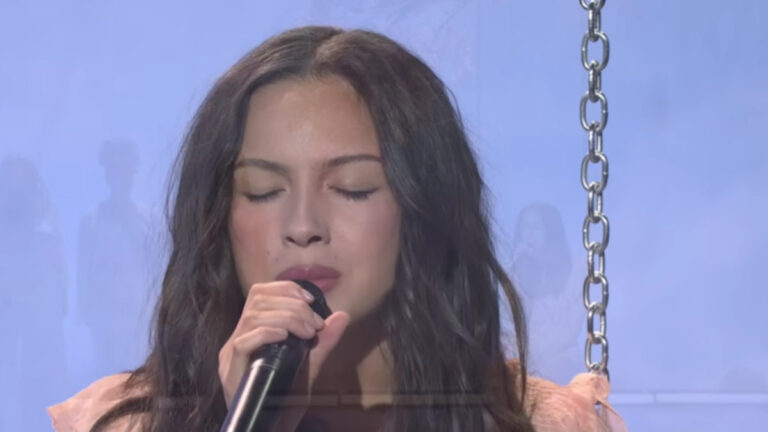
Zara Larsson has never been shy about speaking her mind, and her latest comments about music consumption are once again stirring conversation across the internet. The Swedish pop star revealed that she actively blocks certain artists on Spotify, explaining that many of the musicians she has removed from her listening experience are people she considers abusers or figures she personally does not want to support.

According to Larsson, listeners scrolling through her playlists would never find songs from artists like Chris Brown, making it clear that her streaming choices reflect her personal values as much as her musical taste. She also emphasized that there are artists she simply refuses to platform, stating that some names would never appear in her rotation regardless of popularity or chart success.

Her comments immediately reignited one of music culture’s most persistent debates. Can audiences separate art from the artist, or does streaming someone’s music indirectly support their behavior?

In the streaming era, listening is no longer passive. Every play counts toward revenue, algorithmic promotion, and cultural relevance. Blocking an artist today is not just a personal preference. It becomes a form of consumer activism. Larsson’s stance reflects a growing shift among younger listeners who view playlists as ethical spaces rather than purely entertainment driven ones.

For many fans, her decision feels understandable. Streaming platforms make it incredibly easy to curate listening environments aligned with personal beliefs. If audiences can mute songs they dislike sonically, why not mute artists they disagree with morally? Larsson’s approach treats music consumption as intentional rather than automatic.

At the same time, her comments highlight how complicated the issue remains. Music history is filled with influential artists whose personal lives are controversial or deeply problematic. Some listeners argue that art exists independently from the creator once released into the world. Others believe continuing to stream an artist translates into financial and cultural endorsement.

What makes Larsson’s statement resonate is its simplicity. She is not demanding universal boycotts or policing what others listen to. She is describing her own boundary. In an industry where artists are often expected to remain neutral to avoid backlash, openly acknowledging personal limits feels unusually direct.

The reaction online has been predictably divided. Supporters praise her for standing by her principles, while critics argue that music appreciation should remain separate from personal judgment. Yet the intensity of the conversation reveals something bigger than one artist’s playlist. Audiences today are redefining fandom itself.

Streaming culture has transformed listeners into curators of identity. Playlists communicate values, moods, politics, and personal ethics. Zara Larsson blocking certain artists is less about censorship and more about agency. She is choosing what energy she wants attached to her daily listening experience.

Whether people agree with her or not, the conversation she sparked reflects a changing relationship between celebrity, accountability, and consumption. Music no longer exists in isolation from the world around it. For many listeners, who they stream has become just as important as what they stream.

Karan Kundrra’s Tattoo for Tejasswi Prakash Is Breaking the Internet

Karan Kundrra stuns fans with a portrait tattoo of Tejasswi Prakash, sparking buzz online and proving once again why TejRan remains TV’s most adored couple.Karan Kundrra and Tejasswi Prakash have long held a special place in the hearts of fans, who fondly refer to them as ‘TejRan’. Ever since their romance blossomed on Bigg Boss 15, the couple has continued to captivate audiences with their chemistry and unwavering support for each other.

Now, Karan has taken his love for Tejasswi to a whole new level with a gesture that has set social media buzzing. The actor recently got a tattoo dedicated to his ladylove — and not just a small symbol or name, but a striking portrait of Tejasswi inked across his chest. The grand romantic move instantly caught attention and has since become one of the most talked-about celebrity moments online.

The reveal happened during a Ramadan celebration in Mumbai, where Karan was seen interacting with the paparazzi. Dressed in a purple kurta that he left slightly unbuttoned, he made sure the tattoo was visible, offering photographers a glimpse of the artwork. His shy smile during the moment seemed to reflect both pride and affection, making the gesture feel even more personal and heartfelt.

Interestingly, the actor has not yet confirmed whether the tattoo is temporary or permanent. However, that hasn’t stopped fans from expressing their admiration. Social media platforms quickly filled with comments praising Karan’s romantic act. Many fans described the gesture as a sign of true love, while others jokingly labeled Tejasswi as the “luckiest girl.”

The buzz surrounding the tattoo has also reignited conversations about the couple’s journey together. Their love story began inside the Bigg Boss 15 house, where what started as friendship gradually evolved into romance. Karan’s on-screen confession of his feelings became one of the season’s most memorable moments, especially since Tejasswi eventually went on to win the show.

After stepping out of the reality show, the couple made their relationship official and have remained inseparable since. From attending events and vacations together to sharing glimpses of their life on social media, TejRan has consistently offered fans a window into their bond.

Professionally too, they have supported each other’s careers. Karan was often seen visiting Tejasswi on the sets of Naagin 6, cheering her on during the demanding shoot schedules. The duo has also collaborated on music videos such as Rula Deti Hai and Baarish Aayi Hai, further delighting fans with their on-screen chemistry.

Earlier in 2025, during an appearance on Bharti Singh’s podcast, Karan shared an anecdote about meeting Tejasswi’s parents for the first time. He recalled how the interaction quickly became comfortable and welcoming, with her mother warmly expressing trust in him.

He also spoke about Tejasswi’s personality, describing her as grounded yet strong-willed. According to him, one of her most admirable qualities is her independence — she doesn’t get easily influenced and values logical conversations. He highlighted that her confidence and street-smart nature are part of what makes her so unique.

As fans continue to debate whether the tattoo is permanent, one thing remains clear — Karan’s gesture has once again reinforced why TejRan continues to be one of the most loved celebrity couples today.

Zendaya Says If You Disrespect Her Dog It’s a Red Flag

0

Zendaya is making it clear that when it comes to relationships, her dog comes first. During a recent interview about dating red flags, Zendaya joked that she would absolutely get into a fight if someone even looked at her dog the wrong way. While she said it playfully, the message behind it was serious. For her, how someone treats animals reveals a lot about their character.

She explained that dogs are a good judge of character and that she pays close attention to how people behave around her pet. If someone is dismissive, impatient, or unkind toward animals, that is an immediate warning sign. On the other hand, genuine warmth and attentiveness go a long way.

Zendaya affectionately referred to her dog as her child, saying she loves her “baby” deeply. Anyone entering her life romantically would need to understand that her pet is family. It is not just about liking dogs. It is about showing empathy, patience, and respect.

The actress also noted that she watches how people treat those around them in general. That includes animals, friends, service workers, and strangers. Small everyday interactions, she suggested, reveal more about a person than grand romantic gestures ever could.

Zendaya’s comments resonated with many fans online, especially fellow pet owners who see their animals as part of the family. In a world where dating can feel unpredictable, her red flag rule is simple. If you cannot be kind to a dog, you probably cannot be trusted with someone’s heart either.

Vinod Bachchan Decodes the Allure of Wedding Stories in Ginny Wedss Sunny 2

0

Indian cinema has long celebrated weddings as more than just ceremonies — they are emotional spectacles filled with laughter, drama, misunderstandings and unforgettable moments. Over the years, audiences have connected deeply with stories that mirror their own family experiences, where chaos and celebration coexist. Soundrya Production has been one of the key creators of such heartland entertainers, delivering films that capture the essence of Indian relationships and traditions.

With successful titles like Tanu Weds Manu, Shaadi Mein Zaroor Aana and Ginny Weds Sunny, the banner has built a reputation for presenting relatable stories wrapped in humour and emotion. Continuing this tradition, Soundrya Production is now set to bring another vibrant romantic entertainer to the big screen with Ginny Wedss Sunny 2.

Set against the colourful and energetic backdrop of an Indian wedding, the film promises to be a lively romantic comedy that blends warmth with chaos. The recently released poster featuring Avinash Tiwary and Medha Shankr offers a glimpse into the film’s unique dynamic. Their characters appear to come from completely different worlds — one a strong, grounded wrestler and the other a spirited, carefree young woman.

Their unexpected meeting sparks a chain of events that leads to confusion, humorous misunderstandings and emotional entanglements. As their families get involved, the story unfolds into a rollercoaster of dramatic moments and lighthearted clashes. What begins as a collision of opposites gradually evolves into a journey of understanding, connection and romance.

True to the spirit of a grand Indian wedding, the narrative promises a mix of joy, madness and heartfelt emotion. The film aims to capture not just the spectacle of wedding celebrations but also the emotional undercurrents that run beneath them — the search for companionship, the pressure of expectations and the beauty of commitment.

Producer Vinod Bachchan shared his perspective on why wedding stories continue to resonate with audiences. He emphasized that weddings in India are deeply layered events, filled with emotion, laughter and drama. Beyond the rituals and celebrations lies a more intimate journey — the process of finding the right partner, navigating misunderstandings and forming unexpected bonds.

He believes that when two individuals finally choose each other, there is a sense of hope and emotional fulfillment that audiences naturally connect with. According to him, the continued love for family-driven entertainers reinforces the idea that viewers enjoy stories that reflect their own realities, values and aspirations.

Adding depth to the film is a strong supporting cast that includes seasoned performers such as Lillete Dubey, Sudhir Pandey and Govind Namdev, along with Gopi Bhalla, Nayani Dixit, Vishwanath Chatterjee and Rohit Chaudhary.

Presented by Zee Studios and Soundrya Production, the film is produced by Vinod Bachchan and Umesh Kumar Bansal. Written and directed by Prasshant Jha, Ginny Wedss Sunny 2 is slated for a theatrical release on April 24, 2026.

With its promise of romance, humour and heartfelt storytelling, the film looks ready to bring audiences back into a world where love blossoms amid laughter, confusion and the joyful chaos of a big fat Indian wedding

Adivi Sesh’s Double Life Between Dacoit and G2 Will Leave You Stunned

0

Actor Adivi Sesh is currently navigating one of the most exciting phases of his career as he simultaneously immerses himself in two completely contrasting cinematic universes — Dacoit and G2. These projects not only differ in tone and storytelling but also demand entirely different emotional and psychological approaches, highlighting Sesh’s growing range and depth as a performer.

In Dacoit, Sesh steps into a world that is raw, rugged and deeply rooted in rural intensity. The film unfolds in a harsh, emotionally driven landscape where survival takes precedence over everything else. His character is grounded, instinctive and shaped by pain, vulnerability and human struggle. The narrative thrives on emotional realism, and the storytelling leans heavily on its writing, demanding Sesh to deliver a performance that feels lived-in rather than performed. It is a universe filled with dust, danger and desperation, where choices are dictated by circumstance rather than strategy.

Completely opposite to this is G2, where Sesh transforms into a sleek and calculated presence within a global, high-stakes environment. Here, emotion takes a backseat to intelligence, precision and tactical thinking. The storytelling operates within the framework of a franchise-driven universe, where scale, sophistication and control define the character’s journey. Instead of reacting instinctively as in Dacoit, Sesh’s role in G2 requires restraint, mental sharpness and strategic execution.

Speaking about the experience of balancing these two drastically different roles at the same time, Sesh shared how creatively enriching the journey has been. He expressed that what excites him the most is the sheer contrast between the worlds he is inhabiting. While Dacoit demands emotional vulnerability and instinctive responses rooted in survival, G2 pushes him toward a more measured and intelligence-driven mindset.

Switching between these emotional frequencies has not been easy. Moving from a character who reacts from the gut to one who operates with calculated precision requires constant mental recalibration. However, Sesh views this challenge as an opportunity rather than an obstacle. For him, the ability to transition between such extremes is not just creatively stimulating but also deeply fulfilling as an actor.

This phase in his career reflects a fascinating duality — one film grounded in the dust and soil of human struggle, and the other thriving in the polished shadows of global intelligence. Together, they showcase not just versatility but also a willingness to push boundaries and explore contrasting storytelling forms.

By committing to both emotionally charged realism and stylized strategic drama, Adivi Sesh continues to strengthen his reputation as a performer who is unafraid of complexity. His journey through these parallel cinematic paths reinforces why he remains one of the most compelling storytellers of his generation, constantly evolving and redefining his craft with every role he takes on.

Zeenat Aman’s Bold Take On Marriage Is Sparking Debate Again

0

Veteran actress Zeenat Aman has long been known not just for her iconic presence on screen but also for her fearless honesty off it. Over the years, she has consistently chosen to speak her mind, even when her views challenge societal norms. Recently, she once again stirred conversation by sharing a throwback clip from her 1999 appearance on Rendezvous with Simi Garewal, hosted by Simi Garewal. Alongside the video, Zeenat reflected on how her opinions about relationships — particularly live-in partnerships — have remained unchanged over the decades, despite facing criticism from some quarters.

A few months ago, the actress had expressed her thoughts on live-in relationships, which sparked a wave of debate. Some critics accused her of undermining traditional values, but Zeenat clarified that her perspective is not new. The resurfaced interview, she explained, proves that she has consistently believed in the importance of emotional connection over societal validation.

In her caption, Zeenat made it clear that her intention was not to provoke controversy but to share the wisdom she has gained through personal experience. She emphasised that the essence of a relationship lies in the bond shared by two individuals, not in its formal recognition by society or law. For her, the idea that happiness depends solely on marriage is unrealistic. Just as a relationship cannot be validated purely by legal status, marriage alone cannot repair an unhappy partnership.

Drawing from her own life journey, Zeenat highlighted how deeply personal experiences shaped her outlook. She spoke about the profound loss she faced at a young age — losing both her mother and her husband, Mazhar Khan, by the time she was 42. These experiences, she shared, taught her the impermanence of life’s certainties. Even the most cherished relationships can change with time, and children eventually grow up to lead independent lives.

The actress also spoke about how she values the evolving nature of modern relationships. She acknowledged that while societal expectations remain strong, many younger couples today are choosing partnerships built on equality and mutual respect. For Zeenat, the true strength of a relationship lies not in legal documents but in the love, understanding, and respect shared between partners.

She expressed that if her sons ever choose to marry, she would celebrate their decision wholeheartedly. However, what matters more to her is that they find meaningful and equal companionship — whether or not it leads to marriage. In her view, a partnership is most authentic when two individuals choose to be together each day out of love, rather than obligation.

Reflecting on the throwback interview, Zeenat admitted she had not anticipated such deeply personal questions at the time. Even now, revisiting the conversation makes her slightly uncomfortable. Yet, she recognises the importance of open dialogue in breaking societal taboos. She credited Simi Garewal for creating a platform where sensitive topics could be discussed with honesty, paving the way for greater acceptance of diverse perspectives.

Ultimately, Zeenat Aman’s reflections serve as a reminder that relationships are deeply personal journeys. For her, their meaning lies not in social approval but in the daily choice to nurture love and companionship.

Sanjay Leela Bhansali Cried Like a Child After Hearing ‘Tadap Tadap’ — Ismail Darbar Reveals

0

Music composer Ismail Darbar recently revisited one of the most powerful and emotional memories from the making of the 1999 cinematic classic Hum Dil De Chuke Sanam, offering a rare glimpse into the creative intensity of filmmaker Sanjay Leela Bhansali. In a candid conversation with Subhojit Ghosh on his YouTube channel, Darbar revealed the unforgettable moment when Bhansali first heard the now-iconic song Tadap Tadap.

According to the composer, the filmmaker was so deeply moved that he listened to the track nine times in succession before breaking down emotionally. By the ninth replay, Bhansali was overwhelmed with tears, reacting as though he had experienced a profound personal loss — a moment that Darbar described as both shocking and deeply touching.

Darbar shared that this emotional response marked a creative breakthrough for Bhansali. The song didn’t just resonate with him — it clarified his entire vision for the film. It was through Tadap Tadap, Darbar revealed, that Bhansali finally understood the emotional trajectory of Hum Dil De Chuke Sanam. The filmmaker reportedly admitted that the song helped him determine the film’s narrative structure, including where the interval should fall and how the story should conclude.

However, what followed was far from a straightforward creative victory. Despite the emotional impact of the composition, Darbar was surprised to find that Bhansali did not immediately finalize the music. The moment of artistic clarity did not translate into instant professional resolution, highlighting the complex and often unpredictable nature of their working relationship.

Over the years, Darbar and Bhansali have shared a deeply layered creative partnership that has produced memorable cinematic moments in films like Devdas. Yet their journey has been marked as much by disagreements as by mutual admiration. Darbar candidly described their bond as one defined by frequent clashes — comparing their arguments to constant battles — but also emphasized the strong respect and affection that underpinned their collaboration.

The relationship, however, faced a serious strain during the making of Heeramandi: The Diamond Bazaar. Darbar claimed that he had worked extensively on the project’s music for nearly a year and a half before being unexpectedly replaced. According to him, Bhansali had initially committed to working together but later moved forward without him, a decision that Darbar described as a betrayal.

Despite this professional fallout, Darbar’s recollections reveal a bond that extended beyond creative disagreements. He spoke movingly about Bhansali’s personal gestures of support during moments of grief. The filmmaker, he recalled, personally informed him about his father’s passing and traveled to Surat to attend the funeral. Years later, Bhansali also attended Darbar’s mother’s funeral uninvited, choosing to sit quietly by her grave longer than even close family members.

Reflecting on their strained relationship today, Darbar expressed sadness over losing not just a collaborator but a friend. He acknowledged that while their professional journey may have diverged, the emotional connection remains significant.

For Darbar, any possibility of reconciliation lies beyond personal desire. He believes that working together again would require something greater than mutual willingness — suggesting that such a reunion would depend solely on fate or divine intervention.

His reflections ultimately paint a picture of a partnership defined by passion, conflict, creativity, and deep emotional ties — proving that in the world of art, some collaborations are as personal as they are professional.