
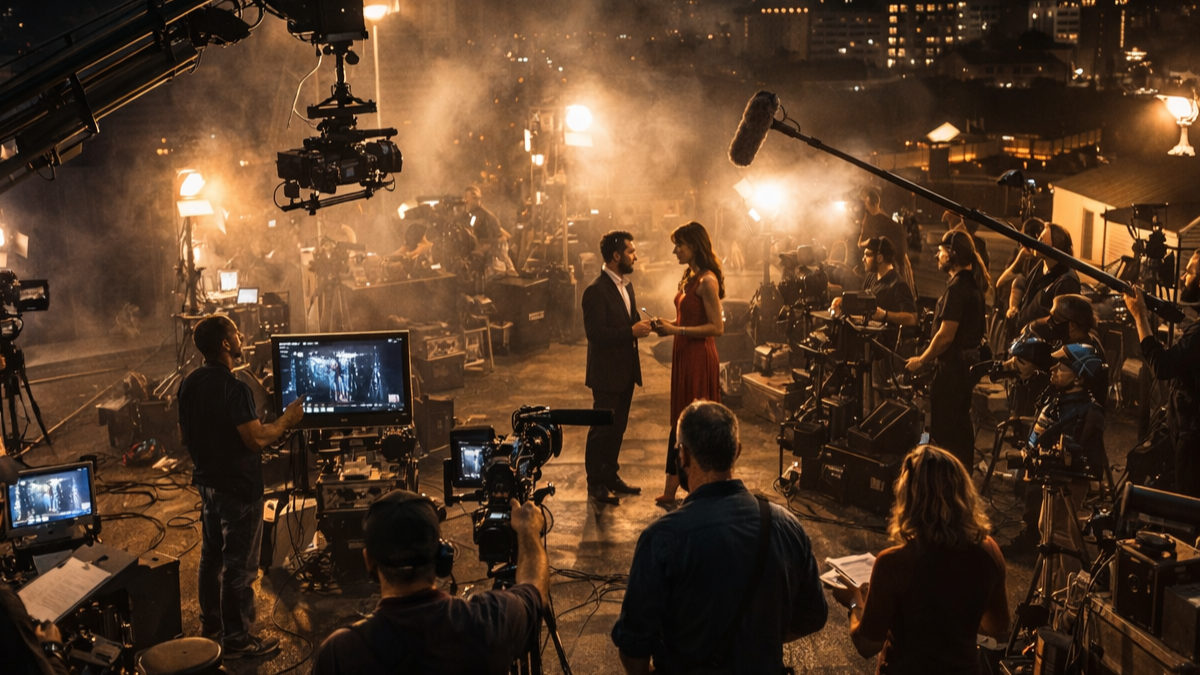
I am not a filmmaker. I don’t sit in narration rooms, I don’t approve scripts, and I don’t stand behind a camera. But I interact closely with producers, distributors, marketing teams, exhibitors, trade analysts and OTT executives. I see the machinery of the industry from the outside — close enough to understand its rhythm, but far enough to observe it without being emotionally invested in its internal politics. And from where I stand, a difficult question keeps surfacing: are we marketing films, or are we manufacturing perception?
The Indian film industry is going through a structural shift. Not merely a creative one, but an economic one. Across industries like Bollywood, Tollywood and Kollywood, the mechanics of recovery have quietly changed. Today, a large percentage of marketing spends appear concentrated on optics rather than communication. Digital noise is carefully engineered through influencers and coordinated trend cycles. Outdoor hoardings are mounted across cities, sometimes placed so high or so strategically blocked that their visibility becomes symbolic rather than functional. Review ecosystems are activated with hospitality and curated access. Opening weekend occupancy is strengthened through bulk ticket buying, 1+1 offers and agency block bookings. All of this creates the appearance of momentum.
The concern is not that films are being marketed aggressively. Marketing is essential. The concern is that in many cases, the energy seems disproportionately focused on constructing perception — sometimes when the core product itself is uncertain. Marketing traditionally amplifies value. Perception management constructs it. And the line between the two appears increasingly blurred.
What has changed most dramatically is the recovery model. Earlier, theatrical performance over time determined a film’s fate. Word-of-mouth could lift a modest opener into a success. Today, the opening weekend has become the most critical financial signal. Those first numbers influence OTT negotiations, satellite pricing, overseas deals and brand integrations. A strong opening — whether organically driven or strategically engineered — creates valuation leverage. That leverage enables recovery. Recovery justifies inflated budgets. And inflated budgets require even stronger openings next time. The cycle sustains itself.
But the side effects are cumulative. When opening optics are exaggerated, actor fees rise in response to perceived market strength. Future production budgets expand. Marketing spends grow more aggressive. Risk tolerance for experimental storytelling shrinks. Writing rooms become secondary to packaging conversations. Instead of asking whether a script is compelling enough to sustain audiences, conversations increasingly revolve around whether the project can be pre-sold.
This is not an accusation against any one individual. Studios operate under pressure. Producers navigate financial uncertainty. Actors respond to benchmarks that the market itself validates. Distributors hedge exposure. Marketing agencies execute what clients expect. The ecosystem is not malicious — it is incentivised in a particular direction. Optics deliver immediate leverage. Substance delivers slower returns. In a high-risk business, immediacy often wins.
Yet audiences have evolved. They are not passive recipients of hype. They may show up once because of noise, but they return only when the experience justifies the ticket. Repeatedly overselling weak content does not merely hurt one film; it gradually erodes trust in the theatrical experience itself. And trust, once diluted, is difficult to rebuild.
Cinema as an institution has survived wars, recessions, technological disruption and the rise of streaming platforms. It will survive this phase as well. But survival should not be the benchmark. Sustainability should be. Sustainable cinema is built on disciplined budgeting, strong writing, transparent reporting and marketing that communicates rather than exaggerates. If perception consistently outruns reality, credibility becomes collateral damage.
Real reform rarely begins with grand collective resolutions. It begins with incremental responsibility. A producer choosing to control costs. An actor aligning remuneration more closely with realistic performance. A distributor resisting artificial occupancy inflation. A marketing head choosing strategic precision over sheer volume. Even modest corrections, if practised consistently, can recalibrate the system over time.
From where I stand — not inside the creative trenches but close enough to the numbers and negotiations — the industry is not collapsing. It is recalibrating under pressure. The question is whether that recalibration will move us back toward storytelling discipline and financial realism, or deeper into the comfort of engineered optics.
Perception can open a film. Only substance can sustain an industry.