
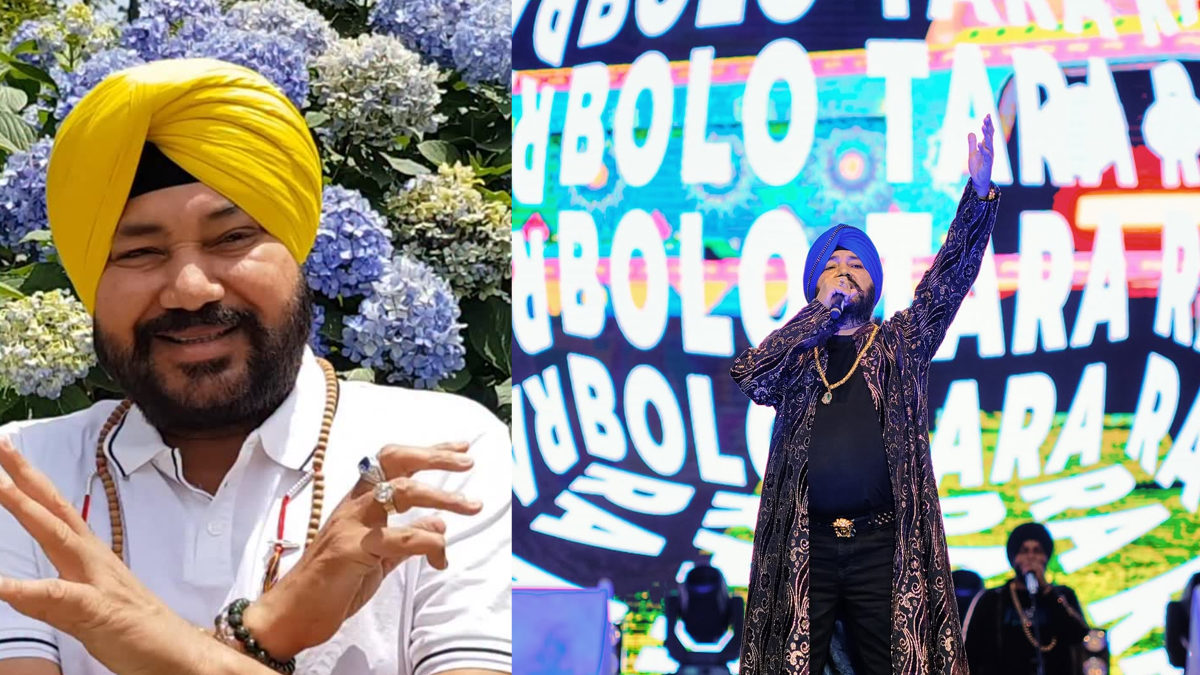
When the dhol hides the dard. There’s a strange truth someone once told me — and once it enters your brain, it refuses to leave – हममें से बहुत लोग उन गानों पर नाचते हैं जो असल में दर्द की कहानी सुना रहे होते हैं। Not symbolic pain. Literal heartbreak. And no one masks this emotional contradiction better than Daler Mehndi.
We grew up thinking he only made high-energy bhangra — but listen closely, translate honestly — and suddenly you realise we’ve been dancing on someone else’s emotional collapse for decades. Take “हो जाएगी बल्ले बल्ले”. On the surface it’s a full-blown celebration. The moment “बल्ले बल्ले हो गई…” hits, uncles who haven’t bent their knees since 1998 suddenly discover muscle memory.
BUT the verses? They’re basically the diary of a man who’s had enough of heartbreak. He literally warns you – “इश्क़ बिमारी… इश्क़ ने कर देना साड्डी सीरत खराब” (Love is a disease… Love will ruin who you are.)
Right after we jump on the hook, he confesses – “इश्क़ दे चक्कर विच, नींद गवानी पैणी रो रो के रह जाणे…” (In the madness of love, you’ll lose your sleep, you’ll cry alone.) Imagine that. We’re doing bhangra to a man telling us we’ll lose sleep and cry over love.
And then comes the killer line — the one nobody hears on the dance floor – “हसन तेरे खो जाणा, रोणे बेबे कल्ले कल्ले…” (Your laughter will fade, and you’ll be left crying… alone.) But by then the DJ has already turned up the volume, and the crowd is too busy shouting “वउउउ!” to notice this is actually a breakup monologue in disguise.
This is the invisible Punjabi magic – ढोल का शोर दर्द की आवाज़ दबा देता है। And this runs across Punjabi folk and pop. A beat may sound like a celebration, but the lyrics carry centuries of longing, loss, regret, and loneliness.
Take Dardi Rab Rab Kardi – People scream “ओ हो हो!” when it plays — not realising the man is literally singing – “दर्दी रब रब करदी… मेनू दर्द समझ ना आया…” (She keeps calling out to God in pain… I never understood her sorrow.)
Or think of all the folk hooks remixed today. Lines women originally sang in quiet courtyards — about missing their partners, handling responsibility alone, feeling unseen — now sit on top of EDM drops and nightclub lights. We dance to tragedy without translation.
Sometimes I imagine a Punjabi DJ with subtitles on a screen – “ये लाइन एक ऐसे आदमी की है जिसे रात भर नींद नहीं आती।” Half the baraat would freeze mid-step.
But maybe this contradiction is exactly why these songs survive. In Punjabi emotion, दर्द और ढोल साथ-साथ चलते हैं. Pain is meant to be felt, not escaped — and also danced through, not surrendered to.
So the next time “बल्ले बल्ले हो गई…” erupts at a wedding and an uncle launches his jacket into orbit, just remember – you might be watching an entire room dance to a warning that says – “इश्क़ बिमारी… रोने पे बी काले काले…” Love is a disease… and you’ll end up crying… alone.
But who’s stopping? By then, the beat has already taken over.
