
Home Blog Page 348

Rani Mukerji Visits Ganpati Temple Ahead of Mardaani 3

0

Rani Mukerji has begun 2026 on a deeply spiritual note as she celebrates three remarkable decades in Hindi cinema. Ahead of her much-awaited film Mardaani 3, the actress visited Pune’s famous Dagdusheth Ganpati temple to seek divine blessings. Dressed simply and gracefully, Rani was seen performing the aarti and offering prayers, marking the milestone year with gratitude and devotion.

Speaking to ANI during her temple visit, Rani revealed that visiting sacred places has become a personal tradition whenever she travels for work. She fondly recalled her connection with the Dagdusheth temple dating back to the shooting days of Aiyyaa. “I always come here for darshan. Whenever I travel, whether my film is releasing or not, I like visiting temples. During Aiyyaa shoot in Pune, I came here many times. Now that my film is releasing, I’ve come again to seek Bappa’s blessings,” she shared.

For Rani, prayer goes beyond professional success. The actress emphasized that her wishes are rooted in universal well-being rather than personal ambition. She said she prays for peace in the world and happiness for all, especially children. “May Dagdusheth Bappa remove suffering from people’s lives and clear obstacles from their paths,” she added. Her visit was also a heartfelt expression of gratitude for the love she has received throughout her career.

Reflecting on completing 30 years in the film industry, Rani expressed deep appreciation for both divine blessings and audience support. She acknowledged that the fate of every film ultimately lies in the hands of viewers. “Whether a film works or not is decided by the audience. I come to Bappa to say thank you. I’ve completed 30 years in this industry, and none of it would have been possible without his blessings and the audience’s love,” she said.

Meanwhile, on the professional front, Rani is preparing for her return as one of Bollywood’s most iconic on-screen cops. She will once again step into the role of Shivani Shivaji Roy in Mardaani 3. Produced by Yash Raj Films, the new installment follows Shivani on a dangerous mission to rescue missing girls across the country, promising high-octane action and emotional depth.

The film is scheduled to hit theatres on January 30, and fans are eagerly awaiting Rani’s powerful comeback to the big screen. As she enters 2026 with prayers, gratitude, and a blockbuster release on the horizon, Rani Mukerji proves that faith and fierce determination remain at the heart of her enduring stardom.
Avengers vs Dune This Christmas! Robert Downey Jr. and Timothee Chalamet React to Release Date War!

0

After the unforgettable “Barbenheimer” phenomenon, Hollywood is preparing for its next big box office showdown — and it’s arriving just in time for Christmas. Avengers: Doomsday and Dune: Part Three are both set to hit theatres on December 18, 2026, and stars Robert Downey Jr. and Timothée Chalamet are already embracing the competition with humor and confidence.

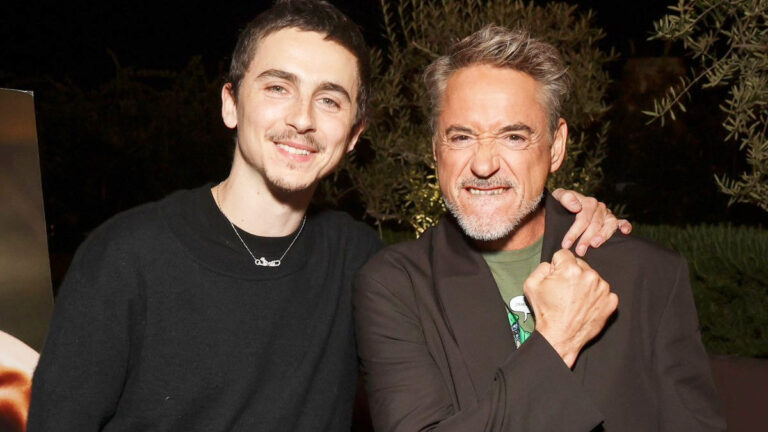
The two actors recently appeared together at a special screening of Chalamet’s upcoming sports drama Marty Supreme in Los Angeles on January 14. Instead of avoiding the topic of their films’ upcoming release-date clash, Downey and Chalamet leaned into it, proving that healthy rivalry can coexist with mutual respect.

Addressing the audience, Downey jokingly revealed that they’ve already coined a name for the cinematic collision. “We both have films opening on December 18, and we decided to name it… Dunesday,” he announced. The crowd responded with laughter, and Downey followed up with another playful remark: “We’ll see if we’re still friends by then,” gesturing toward Chalamet, who smiled in agreement.

While the moment was lighthearted, the industry is taking the clash seriously. Major multiplex chains may soon face scheduling dilemmas, as both films are expected to dominate global screens. Marvel’s Avengers: Doomsday and Denis Villeneuve’s Dune: Part Three represent two of the biggest franchises in modern cinema, each carrying massive fanbases and billion-dollar expectations.

The situation echoes the now-iconic 2023 box office event known as “Barbenheimer,” when Barbie and Oppenheimer released on the same day. Rather than hurting each other, the unexpected pairing turned into a cultural phenomenon, driving fans to watch both films and igniting viral trends across social media. Together, Barbie and Oppenheimer amassed a staggering $2.5 billion worldwide, far surpassing early predictions.

Hollywood insiders are now betting on a similar effect with the upcoming Marvel-versus-Dune face-off. With Christmas holiday crowds, IMAX demand, and global anticipation all in play, December 18, 2026, could become another historic day for cinema.

Downey and Chalamet’s public camaraderie has only added to the excitement. Instead of rivalry, they’ve chosen playful cooperation — a gesture that fans are celebrating as the birth of another pop-culture moment in the making.

Whether audiences will crown Marvel or Dune as the ultimate box office champion remains to be seen. But one thing is already certain: Dunesday is officially on the calendar, and the world will be watching.

Kangana Ranaut’s 2016 Throwback Post Sparks Memories of Bollywood’s Biggest Feud

Kangana Ranaut has once again grabbed social media attention by joining the viral Instagram trend, “2016 is the new 2026.” But true to her bold persona, Kangana didn’t just post a nostalgic throwback — she reopened memories of one of Bollywood’s most controversial chapters, her highly publicized legal feud with Hrithik Roshan. While the dispute ended years ago, the actress reflected on how deeply it once impacted her life and career.

Sharing a carousel of throwback photographs from her peak years, Kangana left fans reminiscing about her golden era in Bollywood. From Queen and Tanu Weds Manu Returns to Krrish 3, the actress ruled both the box office and award circuits through the mid-2010s. In her caption, Kangana asked, “Why is everyone suddenly missing 2016?” before diving into a candid reflection of that turbulent phase.

She wrote that following the massive success of Queen and Tanu Weds Manu Returns, she had become the highest-paid actress in the industry. However, just as her career was soaring, January 2016 brought an unexpected storm. Without naming Hrithik directly, she referred to receiving a controversial legal notice from a colleague — a moment that, she said, shook the industry and divided it into insiders and outsiders. According to Kangana, her success soon turned “poisonous,” and life became a “living hell” as legal battles and public scrutiny followed.

The actress admitted that at the time, she couldn’t imagine that a decade later, none of that drama would hold relevance. Expressing gratitude for time’s healing power, Kangana wrote that if she had known in 2026 she would be laughing freely, enjoying life, and eating carbs in every meal without worry, she would not have suffered so much in 2016. She ended her post by thanking God that those dark days were behind her.

For context, in early 2016, Hrithik Roshan sent a legal notice demanding an apology after Kangana referred to him as a “silly ex” in an interview, igniting speculation about their alleged relationship. He later accused her of sending excessive emails, while Kangana responded with a lengthy counter-notice claiming intimidation. The dispute spiraled into a media frenzy, dividing Bollywood, before a cybercrime investigation eventually settled the matter by late 2016.

On the professional front, Kangana was last seen in Emergency, a film she directed and co-produced, portraying former Prime Minister Indira Gandhi. She now has a psychological thriller and Bharatha Bhhagya Vidhata lined up next.

From blockbuster highs to personal storms — Kangana’s reflection proves time truly changes everything.

Bridgerton Star Luke Thompson Reveals Secret Indian Roots Ahead of Season 4!

0

With Bridgerton Season 4 just weeks away, actor Luke Thompson has surprised fans with a personal revelation that has quickly gone viral. The star, who will lead the upcoming season as Benedict Bridgerton, shared that he is quarter Indian — a detail that even many dedicated fans and fellow cast members were unaware of until now.

The revelation came during a recent conversation with journalist Sakshma Srivastav. Speaking candidly, Thompson said, “I am quarter Indian. My grandmother is Indian — Indian-English. It would be wonderful to meet my Indian fans one day.” The unexpected disclosure instantly sparked excitement online, with fans celebrating the connection and expressing hopes of seeing the actor visit India in the future.

Despite his rising global fame, Thompson admitted he keeps his distance from social media. Surprisingly, it’s not disinterest but self-control that drives his decision. He revealed that he doesn’t maintain an Instagram account because he finds social platforms too addictive. During the filming of Bridgerton Season 3, he struggled to stop scrolling through TikTok, which ultimately pushed him to step back from social media altogether.

However, that doesn’t mean he’s disconnected from fan culture. Thompson shared that friends and colleagues frequently show him viral clips, memes, and trending posts about the show, helping him stay aware of audience reactions. He also reflected on how online buzz played a major role in Bridgerton’s early success, especially when Season 1 premiered during the pandemic lockdown, turning the series into a global streaming phenomenon.

Season 4 finally places Benedict Bridgerton at the heart of the story. After years of drifting through romance and resisting societal expectations, Benedict now faces his defining love story. His journey begins at a masquerade ball hosted by his mother, where he meets the mysterious woman in silver — Sophie Baek, played by Yerin Ha. But their enchanting connection hides a dangerous secret.

Sophie is not part of high society. She is a maid. In a world ruled by rank, reputation, and rigid social order, their romance becomes forbidden territory. What follows is a love story that challenges class boundaries, threatens scandal, and tests the limits of acceptance in Regency-era London.

Netflix has confirmed that Bridgerton Season 4 will be released in two parts. Part 1 premieres on January 29, 2026, followed by Part 2 on February 26, 2026. The season will consist of eight episodes, promising drama, romance, and the signature glamour fans expect.

With a new leading man, a forbidden love story, and a star’s surprising heritage revelation, Bridgerton Season 4 is already one of the most anticipated releases of the year.

Michael Jackson Estate Faces Explosive Court Challenge: Former Defenders Now Claim Abuse

0

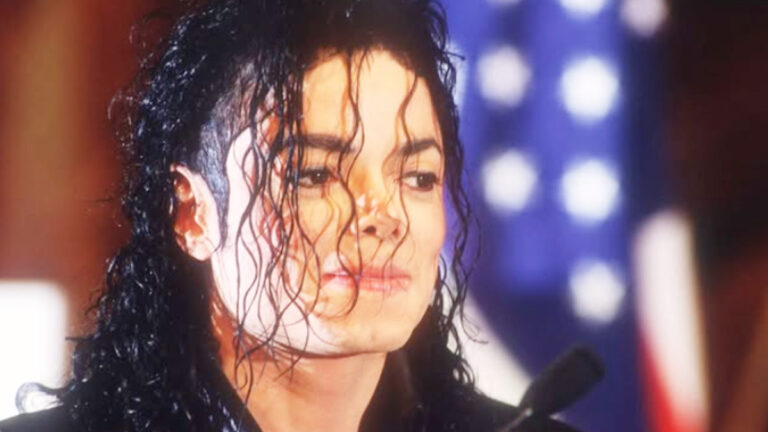
A long-dormant and emotionally charged legal battle connected to the late Michael Jackson has resurfaced in a Los Angeles courtroom, as four siblings who now accuse the pop icon of childhood abuse seek to revive a case believed to have been settled years ago.

On January 14, Frank, Aldo, Marie-Nicole, and Dominic Cascio appeared before a judge to challenge a 2020 settlement agreement with Michael Jackson’s estate. The siblings are attempting to invalidate the deal, arguing it should not prevent them from filing a new lawsuit alleging abuse. Accompanied by their parents, the family travelled to Los Angeles determined to reopen a dispute that has once again drawn intense public scrutiny.

Their attorney, Mark Geragos, told the court that the earlier settlement was “unlawful” and should be considered unenforceable. He argued the agreement was made under pressure and was designed to silence the family from speaking about alleged abuse. However, lawyers representing Jackson’s estate strongly opposed the move, stating that the settlement legally bars any future litigation and requires the matter to be handled through private arbitration.

Estate attorney Marty Singer insisted that the siblings had already reached a financial agreement and later attempted to renegotiate for more money. He told the court that allowing a public lawsuit would violate the original deal. Singer further denied all allegations of abuse, stating that the case moving forward was driven by an alleged extortion demand of $213 million made last year.

The Cascio family had publicly defended Michael Jackson for years, even as abuse allegations surrounded the singer. Their position shifted after the release of the 2019 documentary Leaving Neverland, after which they claimed they were groomed and abused during childhood interactions with Jackson.

During the hearing, the judge declined to issue an immediate ruling on the estate’s request to force arbitration, though reports suggest a tentative ruling favored the estate’s position. Geragos passionately objected, arguing the law was being misapplied.

Tensions escalated further after the hearing. Another lawyer representing the siblings, Howard King, claimed to possess ten hours of sworn video testimony detailing alleged abuse. He said portions of the footage had been seen by estate representatives — a claim Singer firmly denied, calling it a complete fabrication.

Singer also stated that the estate has filed an extortion claim against Frank Cascio, asserting that authorities have been notified.

One sibling reportedly appeared visibly emotional in court, underscoring the personal weight of the proceedings. The court is expected to revisit the dispute at a follow-up hearing scheduled for March 5, where a key decision could determine whether the case returns to public trial or remains sealed in arbitration.

Mithun Chakraborty’s Sons Melt Hearts with Heartfelt Surprise on the sets of Indian Idol

0

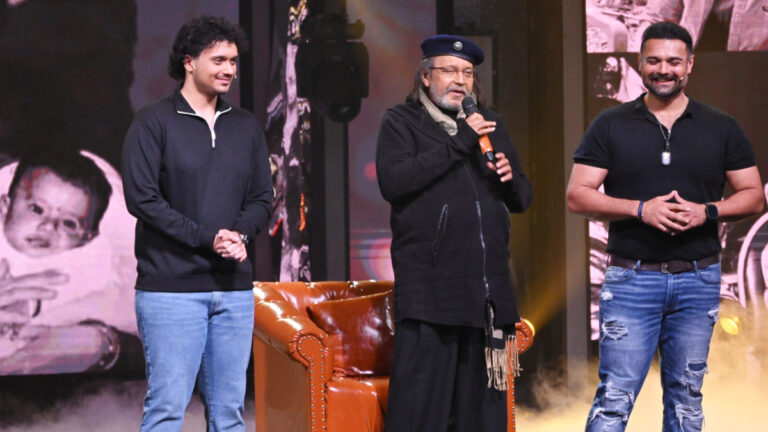
The upcoming episode of Indian Idol is set to deliver one of the most heartfelt moments in the show’s history. Legendary actor Mithun Chakraborty will receive a surprise tribute from his sons, Mahaakshay Chakraborty and Ushmey Chakraborty, as the show celebrates 50 remarkable years of Mithun Da in Indian cinema. What begins as a musical celebration soon turns into an emotional family tribute that leaves the stage — and the audience — deeply moved.

Ushmey Chakraborty shared rare and personal memories of growing up in the shadow of a superstar father. Speaking on the Idol stage, he recalled how their childhood revolved around film sets, as Mithun Da was constantly shooting. He revealed that in the 80s and 90s, at the peak of his stardom, Mithun Chakraborty often worked four shifts a day, leaving little time for family life. Ushmey admitted that even as children, the only place they could meet their father was on set — a sacrifice made for an extraordinary career.

Reflecting on the present, Ushmey expressed disbelief at witnessing his father complete five decades in the film industry in 2026. He then narrated a powerful story from a visit to Kolkata during the promotions of his debut film Bad Boy. The trip included a visit to Mithun Da’s childhood home — a memory that left a lasting impact on him.

Ushmey recalled struggling with the stench of the crowded street outside the house, admitting that as the son of a superstar, he wasn’t used to such surroundings. Curious about his father’s past, he asked locals for stories about Mithun Da’s early days. They led him to a small window and explained that the house was so claustrophobic, one couldn’t even see the stars at night. And yet, from that tiny home emerged one of Indian cinema’s biggest icons — Mithun Chakraborty. His words painted a vivid picture of struggle, determination, and triumph.

Overcome with emotion, Mithun Da was visibly moved by his son’s tribute. Father and sons embraced on stage, creating a moment that resonated deeply with the judges and the audience. Singer Shreya Ghoshal was seen wiping away tears, touched by the heartfelt story and the family bond.

But the episode doesn’t end in tears alone. Host Aditya Narayan lightened the mood by inviting everyone to dance to Mithun Da’s iconic hit “Julie Julie.” Soon, Mithun Da, his sons, and Shreya Ghoshal were grooving on stage, transforming an emotional tribute into a joyous celebration of life and legacy.

This unforgettable episode of Indian Idol airs this Saturday and Sunday at 8 PM on Sony Entertainment Television and Sony LIV — a must-watch tribute to a legend whose journey continues to inspire generations.

Shehbaz Badesha’s Fame Dekh Teaser Is Dark, Intense and Going Viral

0

Bigg Boss has long been known as a career-launching platform, giving contestants the exposure needed to build successful paths beyond the reality show. For Shehbaz Badesha, that post-show momentum is already in full swing. Barely a month after his Bigg Boss journey ended, Shehbaz has announced his next big move — the release of his brand-new song, Fame Dekh. Scheduled to drop on January 19, the track has already begun creating serious buzz online.

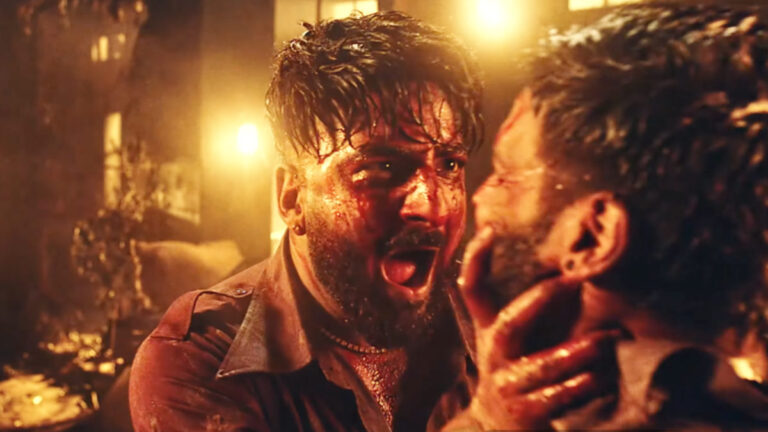
Shehbaz took to Instagram to unveil a gripping teaser and a powerful still from the upcoming music video. In the image, he appears bloodied, staring intensely at the camera, hinting at a dark, dramatic storyline. The visual marks a bold shift from his reality TV image, presenting him not just as a singer but also as an actor taking centre stage in a cinematic music experience.

Encouraging fans to support the project, Shehbaz wrote in his caption, “A lot of hard work went into this. Must watch. Don’t miss it! 19 January.” His message, paired with the striking visual, instantly sparked curiosity among followers, many of whom are now eagerly awaiting the full release.

The comment section quickly flooded with messages of support. “Full support hai bhai aapko,” wrote one fan. Another commented, “Awesome bhai.” Others praised the teaser’s vibe, with one user saying, “Vibe is amazing. Dope teaser. Can’t wait for the full song. Set your reminder, guys — 19 Jan!” Fans also couldn’t stop talking about his intense new look, with comments like “Kya look hai bro” and “Dope look” pouring in. Even casual viewers joined the conversation, with one writing, “I’m not his fan but will watch for sure.”

Another supporter praised the effort behind the project, commenting, “Shehbaz bhai, your hard work will surely pay off. So excited for the cinematic experience of your music video on January 19. The teaser is amazing and your acting looks fire. All the best, team Fame Dekh.”

The teaser for Fame Dekh was officially released on January 14. The song is sung by Shehbaz himself, with composition and lyrics by Aniket Shukla. Early reactions suggest that the track blends high-energy music with a gripping storyline, making it more like a short film than a conventional music video.

With anticipation building and fans counting down to January 19, all eyes are now on Shehbaz’s first major project after Bigg Boss. If the teaser is any indication, Fame Dekh might just mark the beginning of an exciting new chapter in his entertainment career.

Mayasabha – The Hall of Illusion Teaser Sparks Buzz Ahead of January 2026 Release

0

The teaser of Mayasabha – The Hall of Illusion has drawn significant attention online, quickly gaining traction across social media platforms and video-sharing sites shortly after its release. Despite a crowded news cycle dominated by civic elections and daily headlines, the teaser managed to stand out, registering high viewership numbers within minutes and prompting widespread discussion among film audiences.

The film marks the second Hindi feature by filmmaker Rahi Anil Barve, following the cult success of Tumbbad. Since its unveiling, the teaser has sparked curiosity for its restrained storytelling, visual design, and atmospheric tone, with viewers sharing reactions across YouTube, Instagram, Facebook, and X.

Early audience responses describe the teaser as visually striking and concept-driven, with several viewers noting its emphasis on mystery and suspense rather than plot exposition. Many have compared its tone and ambition to Tumbbad, calling it a film that appears designed for theatrical viewing.

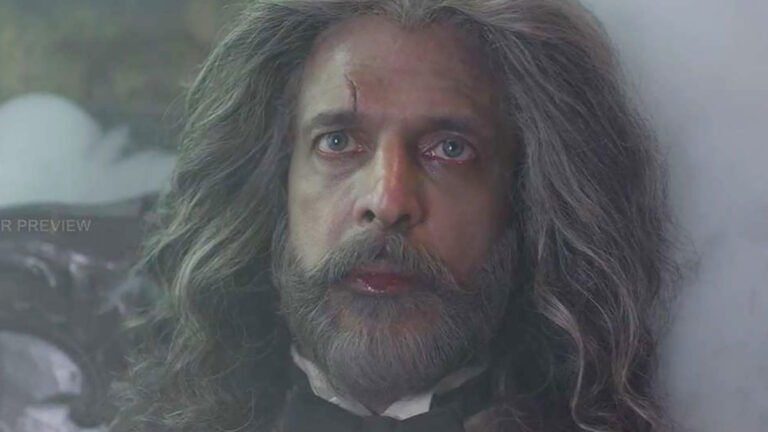
One of the most discussed aspects of the teaser is the appearance of Jaaved Jaaferi, who is seen in a serious, understated role that contrasts sharply with his well-known comic persona. His brief screen presence has generated strong reactions online, with viewers highlighting the transformation as unexpected and intriguing.

The cast also includes Veena Jamkar, Deepak Damle, and Mohammad Samad. Cinematography is by Kuldeep Mamania, while the background score is composed by Sagar Desai. Ashish Ningurkar serves as the film’s creative consultant.

Produced by Girish Patel and Ankoor J Singh, Mayasabha – The Hall of Illusion is backed by Zirkon Films and presented by Pickle Entertainment, led by Sameer Dixit and Hrishikesh Bhirangi. Co-producers include Shamrao Bhagwan Yadav, Chanda Yadav, Keval Handa, and Manish Handa.

The film is scheduled for a nationwide theatrical release on 30 January 2026 and will be distributed across India by Pickle Entertainment in association with UFO Moviez. With sustained online interest following the teaser’s release, Mayasabha – The Hall of Illusion is shaping up as one of the more closely watched Hindi film releases of the coming year.

Bollywood and the Rise of Cuss Words: Shock Over Substance?

0

There was a time when Hindi cinema could communicate rage, defiance, heartbreak, or moral collapse without resorting to explicit language. A pause, a look, a sharply written line, or even silence was enough to carry meaning. Today, that cinematic restraint appears to be steadily eroding, replaced by an increasing dependence on cuss words—as if communication itself risks sounding incomplete without them.

The latest case in point is the teaser of O’Romeo, where a cuss word is delivered by none other than Farida Jalal. The moment stands out not merely for the word used, but for who uses it. Jalal has, for decades, embodied emotional dignity and understated strength on screen. Seeing a veteran of her stature mouth an expletive instantly shifts the conversation from shock value to something deeper: how normalised profanity has become in contemporary Hindi cinema, and how even its most seasoned performers are now expected to adapt to this new tonal grammar.

Filmmakers often justify the rise of abusive language in the name of realism. The defence is familiar—“this is how people speak today.” There is some truth in that claim, particularly in stories rooted in specific social or geographical realities. But the question is no longer about inclusion; it is about excess. When profanity becomes a default setting rather than a deliberate choice, it stops serving the narrative and starts serving attention economics—designed to provoke reactions, trend online, and ensure instant recall.

What makes this shift more telling is that cuss words are no longer confined to characters from the margins—gangsters, rebels, or anti-heroes. They now surface in romantic dramas, family narratives, and supposedly light-hearted stories. The language has moved from being contextual to being cosmetic. It is no longer about who the character is, but about how “current” the film wants to sound.

Farida Jalal’s presence in such a moment also hints at an unspoken industry pressure. When senior actors—who once conveyed emotional depth through restraint—agree to such dialogue, it reflects a wider belief that subtlety may no longer be enough to hold audience attention. The underlying fear seems to be that without sharp, abrasive language, a scene risks being dismissed as dated or toothless.

Streaming platforms have undoubtedly played a role in this shift. Audiences exposed to global content are now desensitised to strong language, and Bollywood is responding to that conditioning. But reaction-driven storytelling comes at a cost. When every emotion is underlined with an expletive, the impact flattens. Loudness replaces depth, and shock replaces substance.

Ironically, some of Hindi cinema’s most enduring and powerful moments remain completely profanity-free. Their strength lies in writing, performance, and emotional honesty rather than verbal aggression. Which brings the debate full circle: is communication in Bollywood truly incomplete without cuss words, or has the industry simply lost faith in silence, nuance, and its own storytelling muscle?

The moment in O’Romeo may fade once the film releases, but it leaves behind a telling marker. It captures a phase where Hindi cinema is negotiating relevance through language—sometimes thoughtfully, often hastily. The real challenge ahead is not about avoiding cuss words altogether, but about remembering that they are tools, not crutches. When used without purpose, they reveal less about society and more about cinema’s growing impatience with subtlety.

Enough of the ‘Wood’: It’s Time We Call It What It Is — Indian Cinema

0

Every time we casually say Bollywood, Tollywood, Sandalwood or Pollywood, we unknowingly accept a hierarchy we never consciously agreed to. A hierarchy where one cinema becomes the original—and the rest become variations. The irony becomes sharper when one looks at how Hollywood itself was born. The iconic HOLLYWOOD sign, today treated as a sacred symbol of global cinema, had nothing to do with filmmaking when it first appeared. In 1923, the sign was erected purely as an advertisement for a real-estate project. It originally read HOLLYWOODLAND, placed on Mount Lee in the Santa Monica Mountains to promote a housing development. The name Hollywood was conceived by real-estate developer H. J. Whitley, not by a filmmaker, studio, or cultural movement. It was only in 1949—decades later—that the sign was shortened to simply HOLLYWOOD, by which time the film industry had already clustered around the area.

In other words, what the world now treats as the gold standard of cinema began as a property marketing exercise. And yet, that accidental name went on to become a global benchmark—so powerful that industries across continents began attaching its suffix to their own identities. India followed suit.

Hindi cinema became Bollywood. Tamil cinema found itself labeled Kollywood. Telugu cinema became Tollywood. Over time, even fiercely regional industries—with their own languages, cultures, aesthetics, and histories—were packaged using the same borrowed ending. This wasn’t geography turning into identity, as it was in Hollywood. This was imitation turning into habit.

For years, the defence was convenience. The “wood” suffix helped foreign journalists, festival curators, and global audiences quickly place Indian films within a familiar mental framework. It worked as a shortcut—an introduction. But shortcuts are meant to be temporary.

India today produces the largest number of films in the world. It tells stories in more than twenty languages. Its cinematic traditions draw from ancient epics, folk theatre, literature, and lived social realities that predate cinema itself. And yet, we continue to describe this vast, plural ecosystem through the linguistic shadow of an American suburb named by a real-estate developer. No other major film culture does this.

French cinema doesn’t need “Pariswood” to feel global. Iranian cinema doesn’t borrow Western labels to assert seriousness. Korean cinema didn’t require a suffix to conquer the world—it arrived on its own terms, confident in its voice.

The continued use of “Bollywood” and its cousins does something subtle but damaging. It keeps Hollywood as the reference point. Budgets are compared against Hollywood. Scale is measured in Hollywood terms. Success is validated by proximity to Hollywood standards rather than by cultural depth or originality.

Calling it Indian cinema is not a rejection of the global—it is an assertion of self.

It acknowledges linguistic diversity without reducing it to gimmicks. It places our films within their own civilisational and cultural context. It invites the world to engage with Indian storytelling as itself, not as an offshoot or echo.

Interestingly, this transition has already begun. Serious film criticism, academic writing, international festivals, and even global streaming platforms increasingly refer to Indian cinema, Hindi cinema, Tamil cinema, Malayalam cinema. The “wood” labels survive mostly in trade gossip, marketing copy, and legacy habit.

In a recent development an event took place about Indian National Cine Academy (INCA), a newly formed body aims to bridge the gap between Bollywood and South film industry. The Indian National Cine Academy (INCA) is an umbrella film body which aims to unite 12 regional film industries, including Bollywood and the four South Indian film industries and aims to profess the use of borrowed name like bollywood, tollywood, etc. and call itself a united ‘Indian Film Industry’

Which leaves us with a simple, uncomfortable question. If Hollywood itself was born out of a real-estate billboard, why are we still living in its shadow?

Perhaps the strongest statement Indian cinema can make today isn’t through bigger box office numbers or global crossovers—but through something far quieter and far more confident:

Calling itself by its own name.