
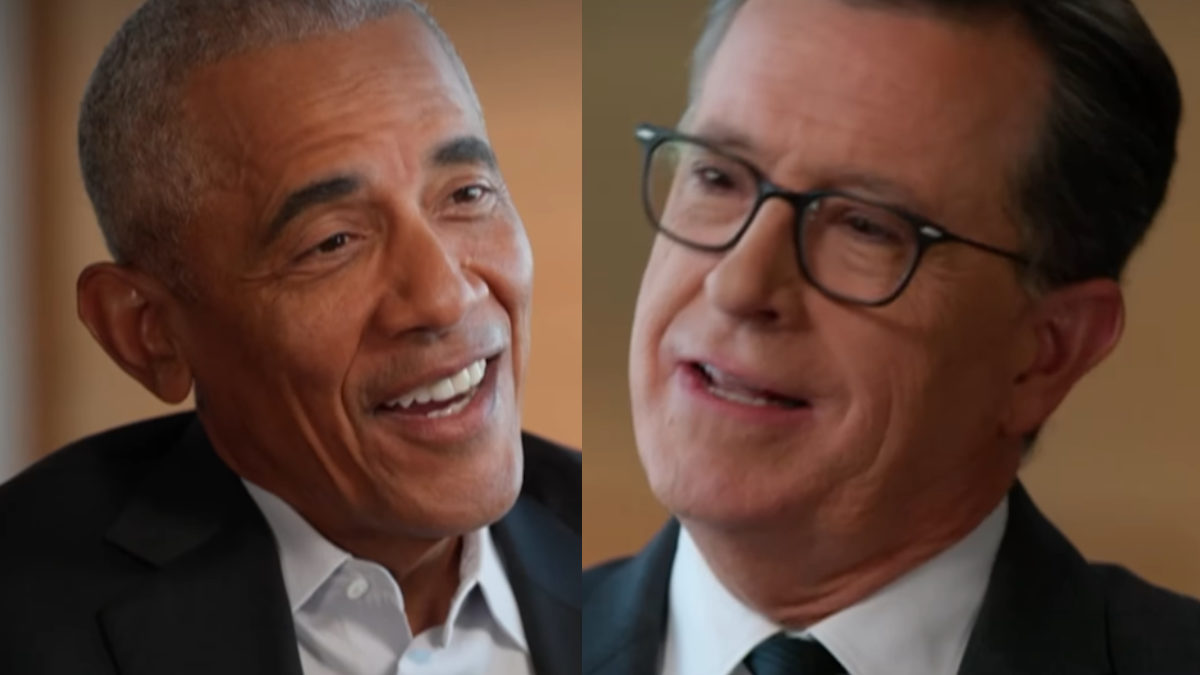
As The Late Show with Stephen Colbert headed toward its final episode, Barack Obama showed up for one last conversation, and it landed somewhere between reflective and quietly pointed. Sitting down with Stephen Colbert at the Obama Presidential Center in Chicago, the tone felt different from a typical late night segment. There was humor, but there was also an awareness that both the show and a certain era of television are coming to a close.
Colbert opened with a joke about running for president, something that might have sounded absurd years ago but now feels less impossible. Obama’s response, “the bar has changed,” carried the kind of understatement that lands harder the more you think about it. He stopped short of calling it an endorsement, but he did not dismiss the idea either.
That exchange sums up why the interview stood out. It was not just about a comedian leaving a show. It was about how the lines between politics and entertainment have blurred to the point where a joke can feel like a commentary on reality.
The conversation also turned serious when Obama spoke about presidential power. He suggested that certain boundaries, like preventing direct influence over legal prosecution, should be more clearly defined. It was a reminder that even in a farewell setting, the stakes of leadership are still very real.
What made the moment resonate was its timing. The Late Show is ending not because it lost relevance, but because the economics of late night television no longer make sense in the same way. CBS has already called the decision financial, not creative. That distinction matters. It signals a shift in how audiences consume content and where cultural conversations now happen.
Colbert has spent over a decade turning current events into nightly commentary, often walking the line between satire and critique. Having Obama appear during the final stretch felt like a full circle moment, linking the show’s early political identity to its closing chapter.
There was also something understated in how Obama thanked Colbert. It did not feel ceremonial. It felt like recognition of a role that late night hosts have played in shaping public conversation, especially during politically intense years.
As the final episode approaches, the question is less about what replaces The Late Show and more about what replaces the space it occupied. Late night television used to be a shared experience. Now, that audience is fragmented across platforms, clips, and algorithms.
This interview did not try to resolve that shift. It simply acknowledged it.
And in doing so, it turned a lighthearted joke about running for president into something more telling. Not about whether Colbert should do it, but about how much the definition of leadership, and the stage it plays out on, has already changed.