
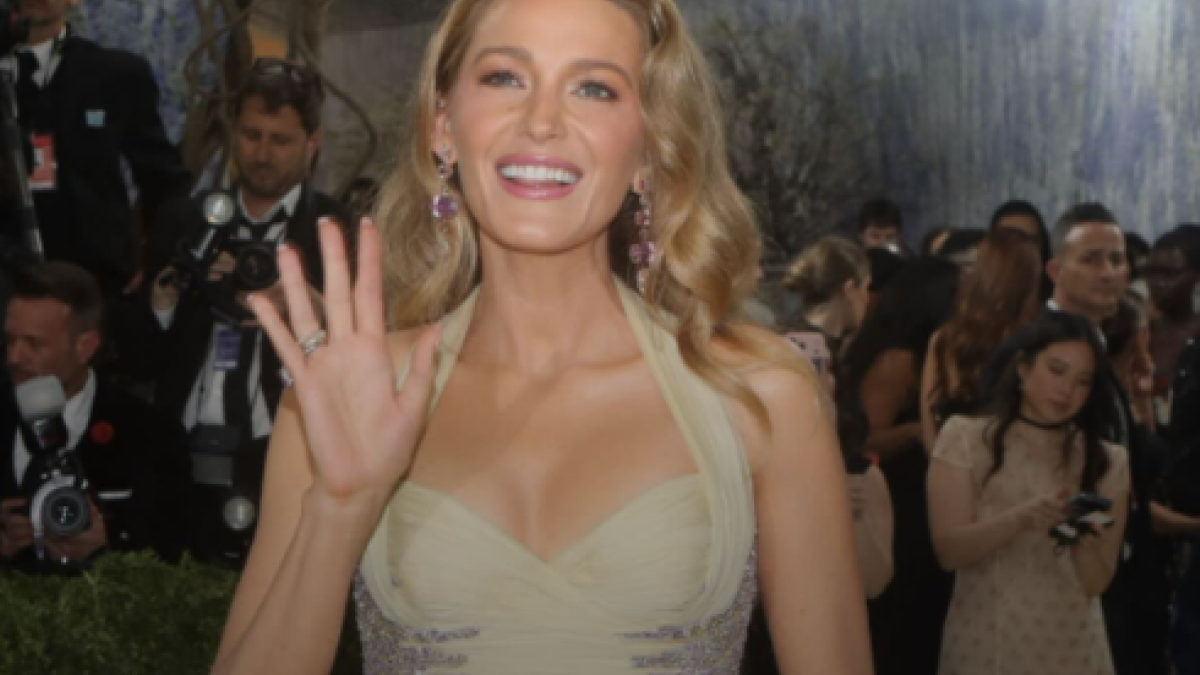
The internet had already decided on a storyline for Blake Lively before she even stepped onto the carpet at the Met Gala 2026. After months of nonstop headlines surrounding the explosive legal war between Lively and Justin Baldoni, social media was fully prepared to analyze every expression, every pose, every interaction, and apparently, even who paid for her seat. Within hours of her appearance, rumors started spreading online claiming Blake either bought her invitation or was not genuinely wanted at the Met Gala following the backlash surrounding the It Ends With Us controversy.
But according to multiple reports, that narrative is simply not true.
Celebrity gossip platform Deuxmoi publicly stated that Blake Lively was personally invited by Anna Wintour weeks before the event and was seated directly at Anna Wintour and Vogue’s table during the gala.
That detail was later echoed in reporting from People magazine, which also described Lively as an official Vogue guest. And honestly, that changes the entire conversation. Because despite what many people online think, the Met Gala is not just an ultra expensive celebrity dinner where wealthy people can casually buy entry.
Yes, tickets reportedly cost enormous amounts of money and tables can run into hundreds of thousands of dollars. But the actual guest list is still tightly controlled by Anna Wintour herself. Approval matters more than money.
Which is exactly why Blake’s appearance became so symbolic. For weeks, internet discourse around the actress has been split between two completely different narratives. One side believes the settlement with Baldoni severely damaged her public image and exposed what critics call “mean girl energy.” The other side believes the backlash became wildly overblown and misogynistic.
So when Blake appeared at fashion’s most exclusive event wearing archival Versace and sitting with Vogue leadership, many people saw it as proof that Hollywood’s elite circles had not abandoned her at all.
And some people online were clearly unhappy about it.
Comments flooded social media almost immediately after Deuxmoi shut down the paid seat rumor:
“Her ego is probably screaming.” “Why wouldn’t she be invited?” “Anna is the founder and queen of mean girl land anyway.”
What’s fascinating is that the reactions were less about facts and more about what people emotionally wanted the outcome of Blake’s scandal era to be.
A lot of internet culture today treats celebrity controversy like a morality play. People expect a clean ending where someone is either fully destroyed or fully vindicated. But real Hollywood rarely works that way.
The truth is far messier. Blake Lively absolutely faced massive reputational damage during the Baldoni legal battle. Viral clips, leaked texts, accusations from both sides, and endless social media discourse turned the case into one of Hollywood’s ugliest PR wars in recent memory.
But at the same time, she is still Blake Lively.
She remains one of the most recognizable fashion figures in celebrity culture, has longstanding relationships within the Vogue and luxury fashion ecosystem, and still carries enormous mainstream visibility. Hollywood often protects stars who remain commercially valuable, especially those deeply embedded in elite cultural spaces like fashion and luxury branding.
And that is exactly why the Met Gala mattered.
It was not just a red carpet appearance. It was a public test of status.
Who gets invited.
Who gets photographed.
Who gets seated where.
Who still has institutional backing.
In celebrity culture, those things become signals.
And Blake being invited personally by Anna Wintour, if these reports are accurate, sends a very loud one. It suggests that while internet opinion may still be divided, the upper tier of fashion and entertainment power structures has not exiled her.
Whether the public eventually moves on from the Baldoni controversy is another question entirely. But the Met Gala made one thing clear: Hollywood may love scandal, but it loves relevance even more.